


U.S. signs landmark nuclear agreement with Saudi Arabia
U.S. signs landmark nuclear agreement with Saudi Arabia

Garrett HaakeWed, July 22, 2026 at 12:04 PM UTC
1.4K
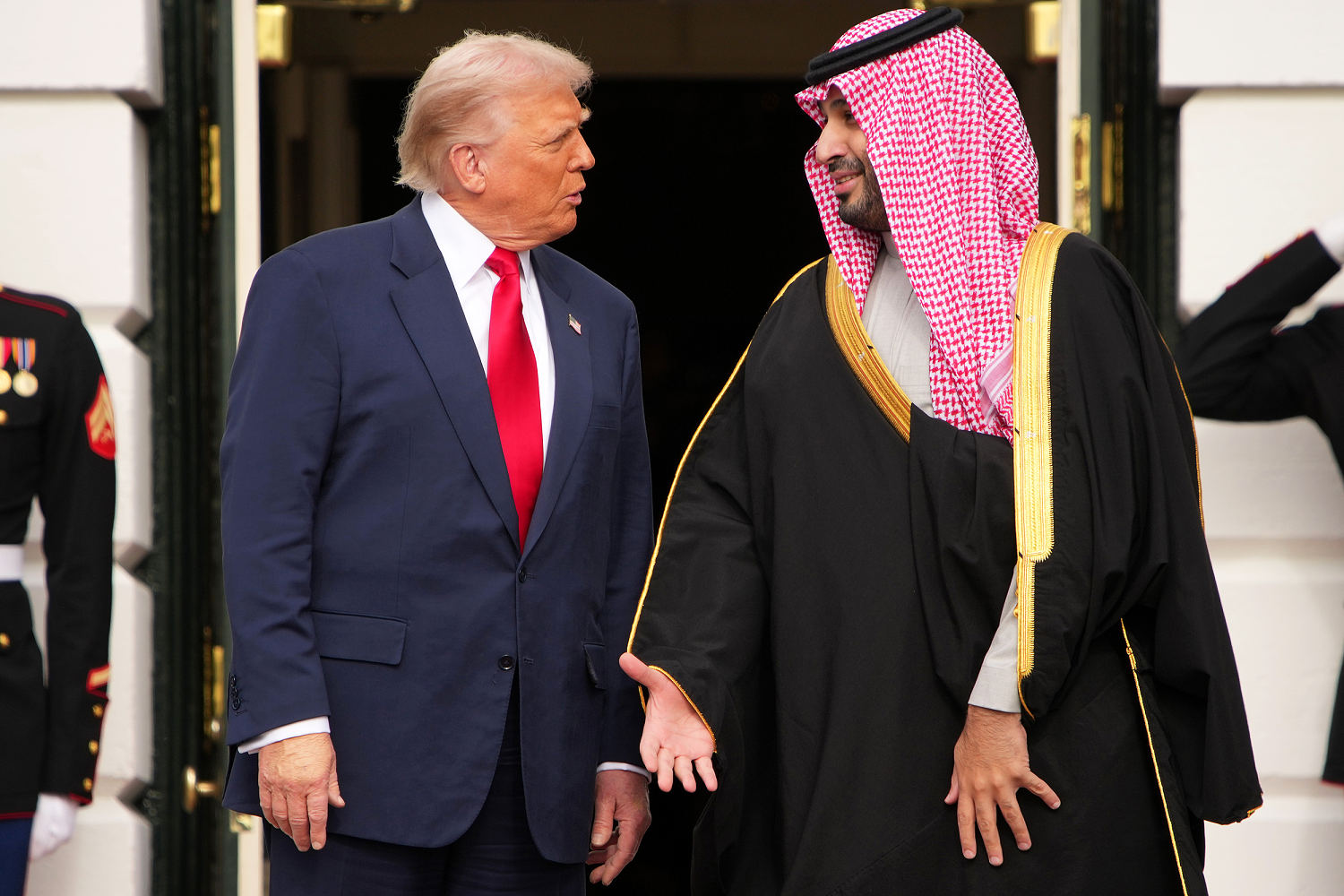
The U.S. signed a landmark nuclear agreement with Saudi Arabia on Wednesday, the Energy Department announced on X.
“U.S. Secretary of Energy Chris Wright and Saudi Minister of Energy His Royal Highness (HRH) Prince Abdulaziz bin Salman signed a peaceful nuclear cooperation agreement, commonly known as a 123 agreement, alongside an accompanying bilateral safeguards agreement,” the announcement read. “Together, these two agreements lay the legal foundation for a decades-long, multi-billion-dollar partnership that advances several priority economic and strategic objectives, including nuclear nonproliferation.”
In the announcement, Wright added: “Rest assured, these agreements uphold the highest standards of nuclear safety and nonproliferation, while relying on the world’s best nuclear technology and scientists, designed right here in the United States.”
Earlier, a senior administration official told NBC News that President Donald Trump had approved the deal.
The U.S. will support creating a nuclear power program and American companies will build the program in the kingdom under the agreement, said the official, who was granted anonymity to speak about the deal before its official announcement.
The deal is not expected to require the most rigorous level of U.N. inspections or include a ban on uranium enrichment or reprocessing of spent nuclear fuel, according to three people familiar with the agreement.
The pact would allow U.S. companies to build a uranium enrichment facility in Saudi Arabia pending a joint U.S.-Saudi study examining whether such a step would be feasible, the people said. The text of the deal has not been released, and the administration has not publicly outlined its details.
The Wall Street Journal first reported news of the agreement.
Congress will be required to vote on the agreement but would need a veto-proof majority to actually block it, which could pave the way for the kingdom to pursue its own uranium enrichment and would be likely to raise fears of nuclear proliferation.
Asked ahead of the announcement about those concerns and reports of an expected deal, Secretary of State Marco Rubio said Wednesday that the U.S. would not “reach any agreement with any country in the world that leads to the risk of proliferation.”
The agreement comes as the war against Iran that the U.S. and Israel launched in late February goes on. Trump has insisted that Tehran should not be able to develop a nuclear weapon, even as the Islamic Republic consistently denies it plans to do so.
An agreement to normalize ties between Israel and Saudi Arabia had been a U.S. requirement for any deal allowing the kingdom to enrich uranium, but Saudi leaders insisted that would not be possible without meaningful progress toward a Palestinian state.
However, Wright discussed building the country’s commercial nuclear power industry with his Saudi counterpart, Prince Abdulaziz bin Salman Al Saud, on a visit to the kingdom last year, shortly before Trump traveled there himself in May 2025.
Advertisement
Any deal without appropriate guardrails would be “concerning from a proliferation perspective,” said Darya Dolzikova, a senior research fellow with the proliferation and nuclear policy program at the Royal United Services Institute, a London-based think tank.
“Any country, period, but particularly countries of proliferation concern have to be really, really robust on their nonproliferation provisions,” she added.
And Saudi Crown Prince Mohammed bin Salman has warned that the kingdom would try to obtain a nuclear weapon if Iran were also able to, Dolzikova noted.
Saudi Arabia also signed a mutual defense pact with Pakistan, the only Muslim nuclear nation, in September. Pakistani Defense Minister Khawaja Asif then said his country’s nuclear program would “be made available” to Saudi Arabia if required.
Saudi Arabia is a member state of the International Atomic Energy Agency (IAEA), which promotes peaceful nuclear work but also inspects nations to ensure they do not have clandestine atomic weapon programs. Based in Vienna, the agency reports to the United Nations General Assembly and Security Council.
While enrichment does not necessarily lead to a nuclear weapon, it can open the door to it. However, any country wishing to pursue one would also have to master other technologies, including the use of synchronized high explosives.
And there has been focus on whether any deal would include the “gold standard” safeguards that would block Saudi Arabia from enriching uranium and reprocessing spent nuclear fuel, both of which are potential pathways to nuclear weapons.
It also remains to be seen whether the agreement includes the “Additional Protocol” that grants the IAEA greater oversight of a country’s nuclear activities.
Ultimately, “the devil will be in the details,” said Sanam Vakil, director of the Middle East and North Africa program at the London-based think tank Chatham House. If Saudi Arabia does retain the right to enrich, she said, “it’s the issue of domestic enrichment that will be more concerning and alarming.”
The deal with the U.S. came a day after senior Saudi and United Arab Emirates officials shared similar social media posts affirming their close historical ties and “wise leadership,” a move that follows months of tensions owing to a rift between the two Persian Gulf monarchies.
The Gulf nations have been divided over their support for opposing sides in the war in Yemen, which culminated in a Saudi airstrike late last year on what it said was a shipment of UAE military equipment to the Yemeni faction Abu Dhabi backed.
Their interests have diverged over a number of issues, including oil quotas.
But the posts from Saudi Media Minister Salman Al-Dosary and Abdulla bin Mohamed Alhamed, chairman of the UAE National Media Authority, said they should focus on their shared history and heritage.
This article was originally published on NBCNews.com
Source: “AOL Breaking”
