


Sandro Mazzola, Inter Milan hero who overcame tragedy to become one of Italy’s greatest footballers
Sandro Mazzola, Inter Milan hero who overcame tragedy to become one of Italy’s greatest footballers

Telegraph ObituariesMon, September 21, 2026 at 12:10 PM UTC
0
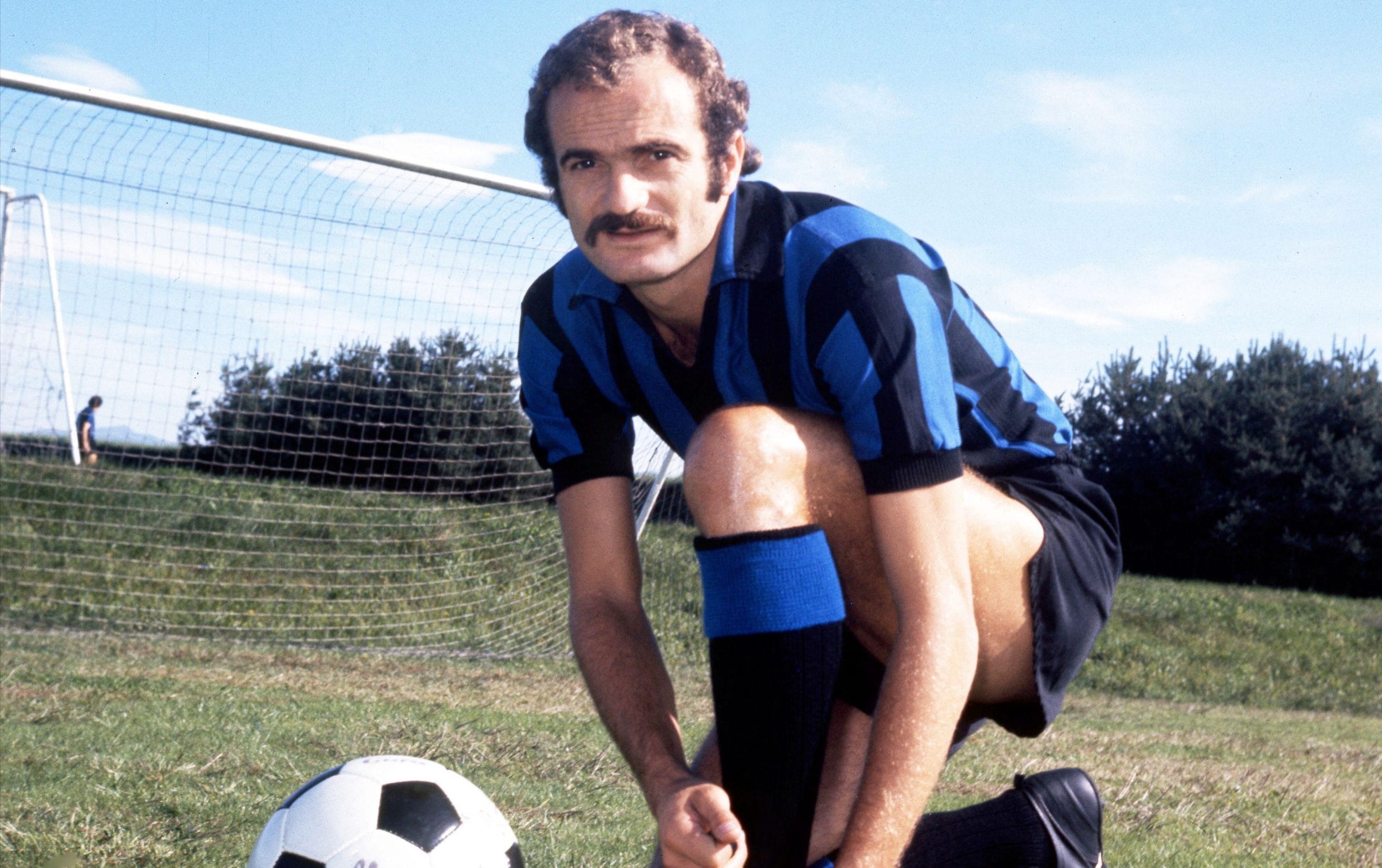
Tall and endowed with a distinctive moustache, Mazzola was a superbly energetic attacking midfielder - Ravezzaniphoto/Alamy Stock Photo
Sandro Mazzola, who has died aged 83, was regarded as one of Italy’s greatest football players, having spent his entire club career at Inter Milan, with whom he won two European Cups, four league titles and, in 1971, second place in the Ballon d’Or vote behind only Johan Cruyff; the previous year, he and Italy also finished as runners-up to Brazil at the World Cup.
His triumphs were even more noteworthy given the burden of early tragedy and expectation that he overcame to claim them. Mazzola’s father, Valentino, was the captain and heartbeat of the great Torino club side which dominated Italian football in the postwar era. In 1949, however, he and the rest of the team were killed returning from Portugal when their aircraft crashed into the Superga basilica which overlooks Turin.
Sandro, who had been born in that city on November 8 1942, was then six. He was living with his father, unaware that he had separated – divorce then not being legal in Italy – from Sandro’s mother, Emilia. In the aftermath of his death, Valentino’s 19-year-old companion, Giuseppina Cutrone, to whom he had been bigamously married a fortnight before in Vienna, after obtaining a decree from a Romanian judge, kidnapped Sandro.
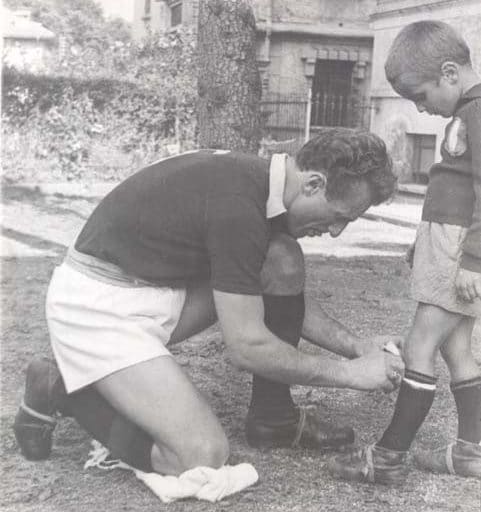
Valentino Mazzola with his son, Sandro, before the accident in which he died on May 4 1949 - Archivio Storico Comune di Torino
He was only found a month later and, on going to live with his mother on the outskirts of Milan, his father’s hometown, learned he had a younger brother, Ferruccio. Sandro discovered his father was dead when he overheard his mother talking to a neighbour. The family lived in poverty, with Sandro making money by selling contraband cigarettes. He and Ferruccio (who would also become a footballer) became mascots at Inter Milan’s matches; they would receive a bonus when the team won.
Mazzola recalled that his father had taught him the basics of the game and, like Valentino, he became a forward and attacking midfielder. His first kickabouts came with a local church side, playing with the future singer and actor Adriano Celentano. Sandro took time to reveal his talents and was irritated by comparisons with his father; for a time he contemplated turning to basketball instead. At school, he studied accounting.
Nevertheless, at 18 he was given his debut for Inter by its enigmatic Argentine manager, Helenio Herrera. In protest at a decision to replay a league match against Juventus, Herrera fielded the club’s colts and lost 9-1; Mazzola scored Torino’s only goal. More slowly than he had hoped, he then became a regular in the side and in 1963 it won the Serie A title.
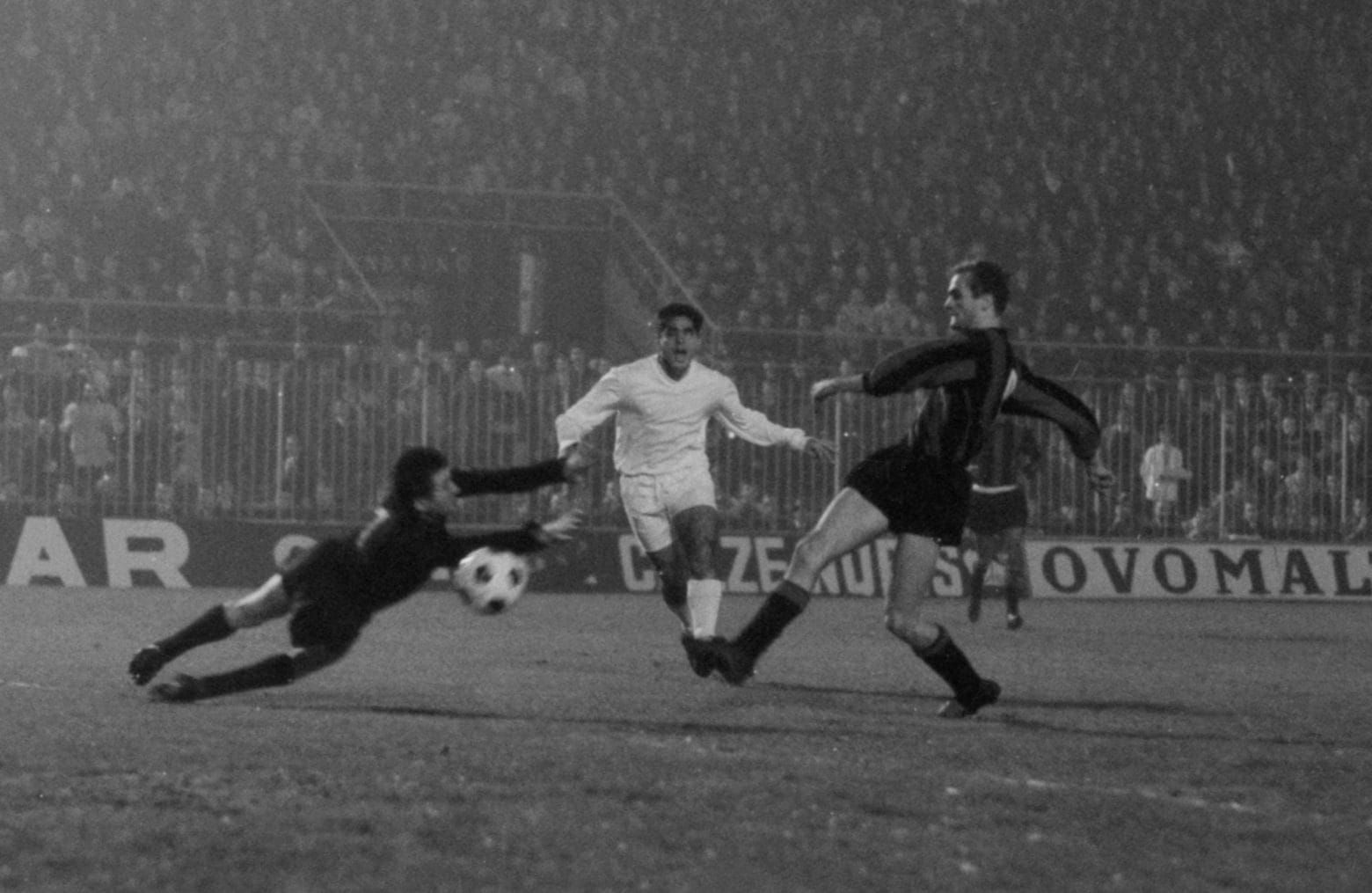
Playing against Dinamo Bucarest at the San Siro (1964) - FC Internazionale Archive
The team conceded just 20 goals in a 30-game season. Their style of play was built around a watertight defence – catenaccio (the bolt) – and rapid counter-attacks. Key players included fullback Giacinto Facchetti, Brazilian winger Jair and Gerry Hitchens, the English striker. Mazzola initially played off the latter, before forging an understanding with the mercurial Spaniard Luis Suarez.
Tall, with a distinctive moustache, Mazzola revealed himself as a different kind of player from his father, who was a more elegant presence on the pitch. By contrast, the young Mazzola bustled athletically. Quick and energetic, he would drop back to help the midfield before surging away from defenders with one of the serpentine dribbles for which he became famous.
Later in his career, when he became less mobile, Mazzola turned himself into a playmaker, using his body to shield the ball and his rapid speed of thought to make telling passes. Although he would become Inter’s main goalscorer, being dynamic in the air and capable of shooting powerfully from distance, he was never an accumulator of goals, focussing principally on contributing to the team as he could.
Advertisement
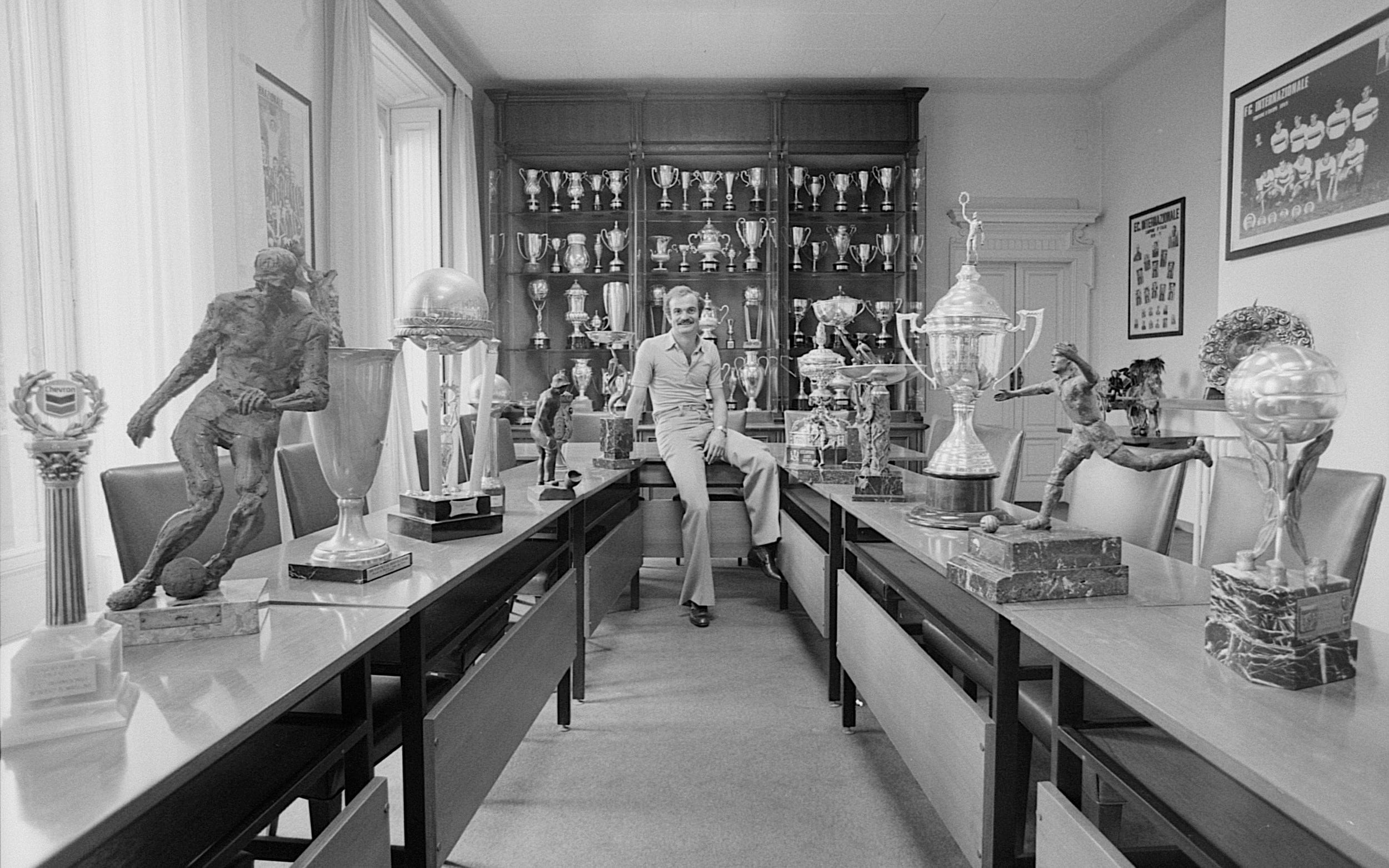
Mazzola surrounded by his trophies (1977) - Mondadori Portfolio
Their confidence buoyed by Herrera’s mind games (and allegedly boosted by the stimulants he fed them), Inter won the league title again in 1965, 1966 and 1971. They also reached the Coppa Italia final in 1965, when Mazzola was the league’s top scorer. The following season saw him achieve his best haul, scoring 19 times in 30 matches, an impressive feat in the defensively minded environment of Serie A.
It was in Europe, however, that the team most deserved their epithet as Grande Inter (Mazzola’s father’s Torino had been accorded the same “great” status.) In 1964, the club won its first European Cup when Inter defeated Real Madrid 3-1 in Vienna, with Mazzola scoring twice. After the match, the brilliant Hungarian Ferenc Puskas gave him his shirt, saying that he had played with Mazzola’s father and that Sandro was worthy of him. Mazzola said later he had never been happier.
The following year, Inter retained the trophy in their own stadium by beating Benfica. Inter also reached the final in 1967, with Mazzola scoring, but lost to Celtic’s “Lions of Lisbon”. In 1972, they went down to Cruyff’s Ajax. Mazzola remains the only Italian to have scored in two European Cup or Champions’ League finals.
In 2005, Uefa voted a famous dribble of Mazzola’s against Budapest Vasa the best goal in the European Cup and the Champions League to date and until 2025 he was Inter’s leading scorer in Europe. He remained a one-club man, hanging up his boots in 1977 after 17 seasons at the San Siro, having scored 161 goals in 567 matches.
Mazzola made his debut for Italy in 1963 and went on to win 70 caps and score 22 times. He was voted into the team of the tournament when Italy won the European championship in 1968, albeit on home soil and from a field of four competitors. The team arguably peaked two years later when they overcame West Germany in extra time in the semi-final of the World Cup, one of the most exciting half hours of football ever seen.
In the final, however, they were famously dismantled 4-1 by Pele’s Brazil, a result attributable in part to the Italians having not recovered from their exertions in the Mexican heat. There had been much debate as to whether Mazzola or his rival Gianni Rivera of AC Milan should play, with manager Ferruccio Valcareggi swapping them over during matches.
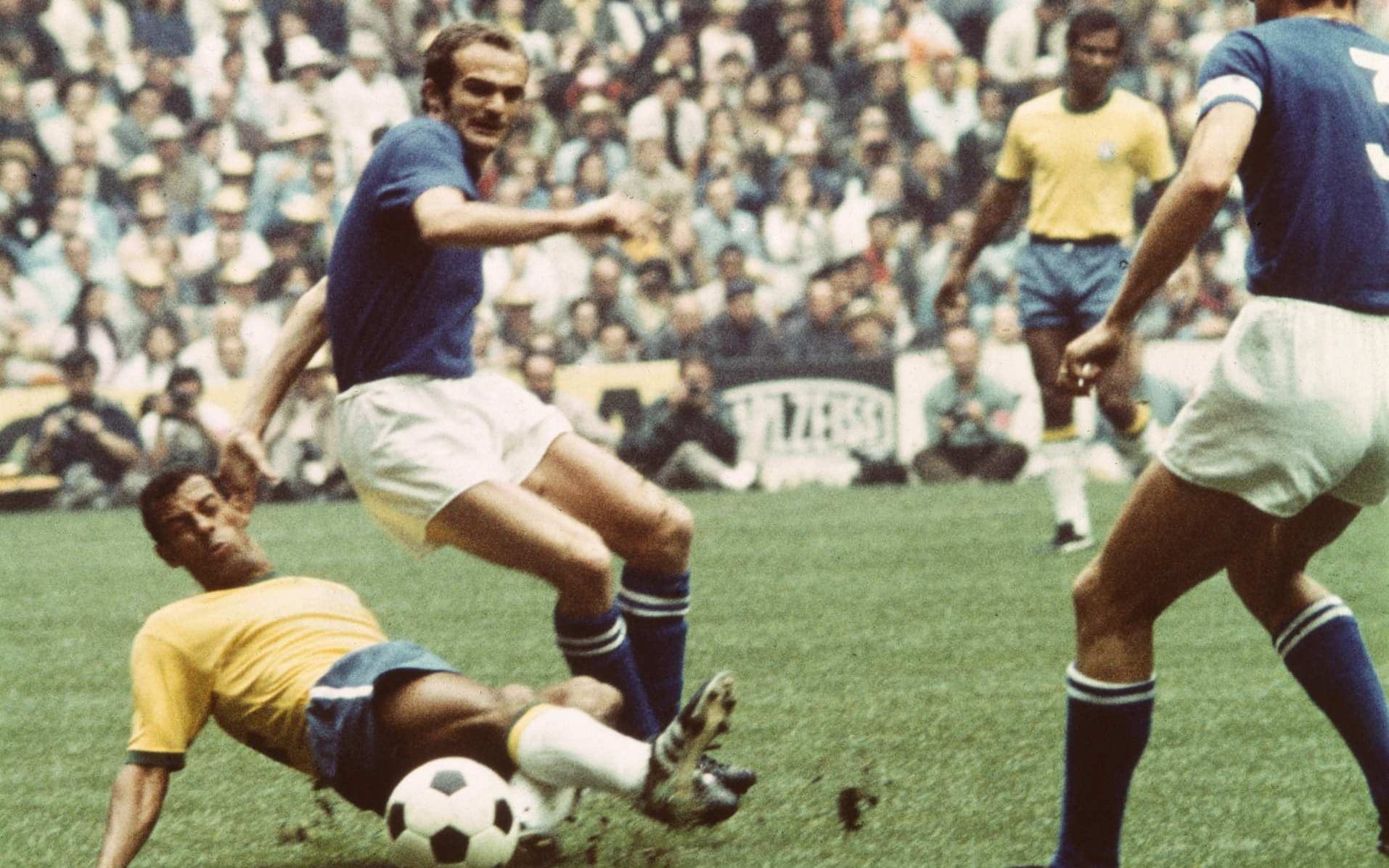
Mazzola being tackled by Brazil’s Carlos Alberto during the 1970 World Cup final - Mirrorpix
In the event, Mazzola remained on the pitch almost until the end of the final, a decision that led to his being unfairly criticised. He also played in the 1966 and 1974 tournaments. His other key contribution to the game was to have co-founded in 1968 the Italian footballers’ professional association.
After retiring, he was the sporting director of several clubs, including Inter and Torino, until 2003. For decades, Mazzola combined these responsibilities with work as a television commentator and pundit. He enjoyed smoking cigars, although he had been unwell for some years. In one of his final interviews, he revealed that he felt closer than ever to his father: “Football brought us together again.”
Sandro Mazzola married, in 1964, Graziella Galante. She survives him with their two sons and two daughters.
Sandro Mazzola, born November 8 1942, died September 19 2026
Source: “AOL Sports”
